
Table of Contents
Toggle| Quick Answer: Softwashing vs. Pressure Washing The right method depends entirely on the surface. Soft washing uses low pressure (50 to 500 PSI) and a biodegradable cleaning solution to kill mold, algae, and mildew at the root. It’s the correct choice for roofs, vinyl siding, wood, and stucco. Pressure washing uses high-force water (1,500 to 4,000 PSI) and is best reserved for concrete, driveways, and other hard surfaces. Using the wrong method on the wrong surface causes real damage and can void your manufacturer’s warranty. |
Every spring we get calls from Bellefontaine homeowners who made the same mistake. They rented a pressure washer, pointed it at their vinyl siding or roof, and ended up with cracked panels, raised wood grain, or shingles that will never seat properly again. The fix usually costs far more than a professional cleaning would have.
This guide covers exactly which cleaning method is right for each surface on your home or commercial property, why the wrong choice causes damage that isn’t always obvious right away, and what local climate and regulations mean for how often you need to clean. If you want a deeper look at the trade-offs of pressure washing specifically, we break that down in a separate guide.
We are Above All Power Washing, based in Bellefontaine and serving Logan County. We offer both soft washing and pressure washing because the right answer depends on what you’re cleaning, not on which service a company wants to sell you. Call us at (937) 905-5253 or email jake@aboveallpowerwashing.com if you want a straight answer about your specific property.
Softwashing vs. Pressure Washing: What’s Actually Different?
These are not two versions of the same thing. They work through completely different mechanisms and exist for completely different purposes.
How Pressure Washing Works
Pressure washing delivers water at 1,500 to 4,000 PSI. That force is what does the cleaning. It physically blasts dirt, staining, and debris off hard surfaces. No chemical treatment is required. It works fast on materials that can handle the impact, like concrete, brick paths, and heavy equipment. (You may hear “power washing” used interchangeably. Power washing technically adds heat to the water, but both rely on force rather than chemistry.)
How Softwashing Works
Soft washing uses a biodegradable sodium hypochlorite blend combined with a surfactant that lets it cling to vertical surfaces. The concentration is adjusted based on the surface and the severity of the organic growth. Because the solution does the work, water pressure stays low, typically 50 to 500 PSI.
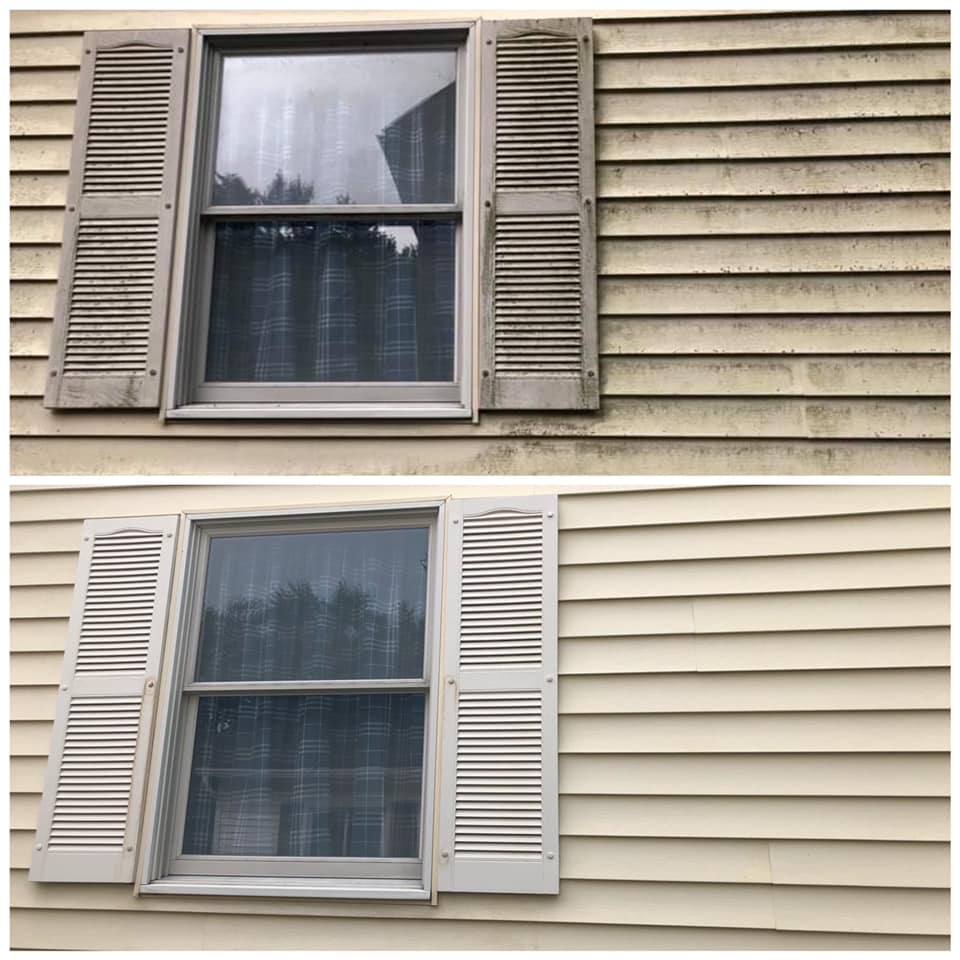
The key difference is that soft washing kills mold, mildew, algae, and bacteria at the cellular level. A pressure washer scrapes organisms off the surface and scatters spores across your siding. Soft washing kills them at the source, which is why results last significantly longer. The National Roof Cleaning Authority defines soft washing by this low-pressure, chemical-first standard.
How the Two Methods Compare
| Feature | Soft Washing | Pressure Washing |
| Water Pressure | 50 to 500 PSI | 1,500 to 4,000 PSI |
| Primary Action | Chemical (kills growth at root) | Physical force |
| Result Duration | Often 2+ years | 6 to 12 months |
| Water Usage | Significantly less | Higher |
| Chemical Use | Biodegradable SH-based blend | Minimal or none |
| Risk Level | Low (pro handles chemicals safely) | High on delicate surfaces |
Which Method Is Actually Safer for Your Home?
Neither method is universally safer. The surface determines the answer, and the wrong choice for the material you’re cleaning is always the risky one.
What Happens When You Pressure Wash the Wrong Surface
Vinyl siding is the most common casualty. High pressure can crack panels, lift them off the structure, and force water behind the wall. That trapped moisture causes mold inside the wall cavity, which homeowners usually don’t discover until they smell it or see drywall damage months later. Our house washing service uses soft washing specifically to avoid this.
Wood decks and fencing are close behind. Pressure washing raises the wood grain, creates a furred texture that absorbs more moisture, and accelerates weathering. You end up with a surface that looks worse than before and degrades faster.
Asphalt shingle roofs are the most expensive mistake. The Asphalt Roofing Manufacturers Association (ARMA) is direct on this: high-pressure washing dislodges the granules that protect your shingles from UV damage. Once granules are gone, the shingle degrades rapidly. Using a pressure washer on your roof can void the manufacturer’s warranty. ARMA’s recommended method for algae removal is a low-pressure bleach solution applied gently and rinsed carefully. That’s exactly what our roof cleaning service delivers.
Stucco develops cracks and surface damage. Older brick loses mortar from the joints. Painted surfaces strip prematurely. In every case, the surface that looks fine from the ground is compromised.
What Happens When You Skip Soft Washing on Organic Growth
Pressure washing algae and mold off siding or a roof doesn’t eliminate the growth. It scatters the spores across the surface. Within a few months, the staining returns, often covering a broader area than before.
Soft washing kills the organism. Done right, it keeps surfaces cleaner for significantly longer because it addresses the root cause rather than the visible symptom. That longer interval between cleanings is one of the main reasons it tends to cost less over time, even though the per-job price is higher.
Surface-by-Surface Guide: Which Method for Your Property
If you want the short answer by surface, start here.
| Surface | Method | PSI Range | Frequency | Key Warning |
| Vinyl siding | Soft wash | 50 to 200 PSI | Every 1 to 2 years | High pressure forces water behind panels |
| Asphalt shingles | Soft wash only | Under 200 PSI | Every 2 to 3 years | Pressure washing voids manufacturer warranty (ARMA) |
| Driveways & concrete | Pressure wash | 2,000 to 3,000 PSI | Every 1 to 2 years (spring) | Best after winter salt season |
| Wood decks | Soft wash or low-pressure | Under 500 PSI | Annually | High pressure raises wood grain and causes splintering |
| Wood fencing | Soft wash or low-pressure | Under 500 PSI | Every 1 to 2 years | Older boards especially vulnerable to grain damage |
| Brick & mortar | Low-pressure wash | Under 400 PSI | Every 2 to 3 years | Downtown design guidelines require low-pressure methods on historic masonry |
| Stucco | Soft wash | Under 200 PSI | Every 1 to 2 years | High pressure creates cracks and surface damage |
| Commercial facades | Soft wash | Under 500 PSI | Every 6 to 12 months | Protect signage, windows, and painted surfaces |
| Parking lots & sidewalks | Pressure wash | 2,500 to 3,500 PSI | Every 6 to 12 months | Must comply with Ohio EPA wastewater rules |
A Note on Wood Surfaces
Deck cleaning almost always calls for soft washing or very low pressure, particularly on older boards where high PSI will raise the grain and shorten the life of the wood. If the deck has visible mold or algae, soft washing is the only approach that stops it from coming back quickly. The same applies to fence cleaning, where cedar and pressure-treated lumber both respond better to chemical cleaning than brute force.
Commercial Properties: Two Cleaning Needs in One Visit
Property managers and business owners have two distinct cleaning needs that residential guides rarely separate. The building facade, any siding, and painted surfaces need soft washing. Concrete parking areas, loading docks, and sidewalks need pressure washing. Combining both services in a single visit is the most efficient approach for commercial accounts.
Ohio EPA rules on commercial wastewater disposal apply to professional cleaning contractors. Runoff from parking lot cleaning contains oils and other contaminants. We collect and properly dispose of wastewater on commercial jobs, which protects your property from regulatory liability.
Why Bellefontaine Homes Face Unique Exterior Cleaning Challenges
If you live here, your home’s exterior is fighting a biological growth problem for most of the year. Around 40 inches of annual rainfall, humid summers, and limited drying time after rain create exactly the conditions mold and algae need to take hold on siding, roofs, and wood surfaces. Spring and early summer are the worst stretch.
North-facing siding and any surface under tree canopy sees the worst of it. Logan County has significant maple and oak coverage, and the organic debris those trees drop feeds biological growth on roofs and siding throughout the growing season. Homes that don’t see direct afternoon sun stay damp longer after rain, which accelerates the cycle.
Winter adds a different problem. Bellefontaine averages around 23 inches of snow per year. Road salt and the repeated freeze-thaw cycle leave mineral residue on concrete, driveways, and masonry. Spring cleaning for those surfaces is almost always necessary. Our driveway cleaning service is built around exactly this kind of seasonal recovery.
| Local Regulations That Affect Exterior Cleaning in Bellefontaine City Property Maintenance Code: Bellefontaine’s Property Maintenance Code requires all exterior property to be maintained in a clean, safe, and sanitary condition. This is not a suggestion. It is code. Downtown Design Guidelines: For historic brick buildings in downtown Bellefontaine, the city’s design guidelines require that power washing be performed only at low pressure to protect historic brick and mortar. Standard pressure washing equipment runs well above safe levels for these surfaces. Ohio EPA Wastewater Rules: Runoff containing cleaning agents and contaminants cannot simply be directed into storm drains or local waterways. Professional contractors maintain proper wastewater handling procedures on every job, particularly for commercial cleaning near the Mad River. |
Many neighborhoods also have HOA standards that specify cleaning schedules for siding, driveways, and roofs. Violations result in notices and fines. If your neighborhood has an HOA, check your CC&Rs and get ahead of it. We work with HOA communities regularly. You can find out more about how we handle exterior cleaning for HOAs on our dedicated service page. Responding to a violation notice is always more expensive than scheduling cleaning on your own terms.
How Often Should You Clean Your Home’s Exterior?
The answer depends on the surface and what it’s up against. We cover this in detail in our guide to how often a house should be soft washed, but the short version is that soft washing results tend to last significantly longer than pressure washing because the treatment eliminates organic growth rather than temporarily displacing it. Pressure washing concrete and hard surfaces typically needs to be repeated every one to two years before mineral staining and biological growth return to a noticeable level.
Timing matters as much as frequency. The best time of year to soft wash your house in central Ohio is late spring, after the heaviest rains and before peak summer humidity. That window removes winter salt residue from concrete, addresses early algae growth on siding before it spreads, and gives surfaces time to dry fully before the humid months set in. A second cleaning in fall, after leaf drop, makes sense for properties with heavy tree coverage. Don’t forget about windows and gutters either. Those often need attention on the same seasonal schedule.
Spring is also our busiest booking period. If you know you’ll need cleaning done in April or May, reach out early to lock in your spot.
Is Soft Washing Worth the Money?
Yes, particularly for roofs and siding. Soft washing typically costs slightly more per job than pressure washing. But because it kills the source of organic growth rather than scrubbing the surface, you schedule it less frequently. You also avoid the repair costs that come from high-pressure damage to vinyl, shingles, or wood. A single prevented repair often costs several times more than a professional cleaning.
Professional soft washing typically runs between $0.10 and $0.50 per square foot. A single-story home usually falls in the $150 to $750 range depending on size, surface type, and the extent of biological staining. For a full cost breakdown, see our guide to what it costs to pressure wash a house in Bellefontaine.
Property managers and commercial owners with high foot traffic or street-facing facades typically need cleaning more frequently than residential properties. Regular exterior maintenance protects asset value, satisfies tenant expectations, and keeps you compliant with city property code.
DIY vs. Professional Exterior Cleaning: What You Risk
Renting a pressure washer and doing it yourself is a reasonable option for a concrete driveway or back patio. For anything else on your home’s exterior, the risk-to-reward calculation doesn’t hold.
Rental equipment often operates at 2,500 PSI or higher with limited adjustability. That pressure is too high for wood, vinyl, or any surface that requires soft washing. There’s no dial that brings a standard rental unit into the range soft washing requires. You need different equipment entirely.
On the safety side, the CDC has documented that pressure washer injuries send thousands of people to emergency rooms each year, and a meaningful share of those injuries require hospitalization. High-pressure injection injuries, where water penetrates the skin, are particularly serious and often underestimated. Protective footwear, eye protection, and maintaining a safe distance from the stream are minimum precautions, not optional ones.
Improper disposal of pressure washing runoff into storm drains or local waterways raises environmental concerns and may conflict with local ordinances. We maintain proper wastewater handling on every commercial job for exactly this reason.
DIY soft washing carries its own complications. Sodium hypochlorite at working concentration requires proper handling, dilution, and protective equipment. Applied incorrectly, it will damage landscaping, discolor surfaces, and irritate skin and airways. The equipment matters as much as the solution.
Why Bellefontaine Property Owners Choose Above All Power Washing
We are a local company. Bellefontaine is where we work, and we understand Logan County’s housing stock, the specific biological growth patterns that come with the local climate, and the regulatory requirements that apply here.
We offer both soft washing and pressure washing because the honest answer to most customers’ questions is that they need one on some surfaces and the other on different surfaces. A company that only offers one method will always recommend that method. We recommend what the surface actually requires.
Our work is fully insured. We handle wastewater disposal responsibly on every commercial job. We carry the equipment to deliver true soft washing at low pressure where it’s needed and pressure washing at appropriate levels for concrete and hard surfaces. If you’re in an HOA, we know what documentation most associations request as proof of service.
HomeLight’s research puts the curb appeal premium at around 7 percent over comparable homes with neglected exteriors. On a home near Bellefontaine’s current median value, that’s a real number. Our piece on how much value pressure washing adds to your home walks through the local breakdown in detail. A professional cleaning costs a small fraction of what that difference represents. You don’t have to be planning to sell for that math to matter.
Frequently Asked Questions
Will soft washing chemicals harm my plants or landscaping?
It’s a real concern and one we take seriously. Before applying any solution, we wet down surrounding vegetation thoroughly. That pre-wetting dilutes any overspray that contacts plant material. We also use the lowest effective concentration for the specific job. On most residential properties, properly applied soft wash chemicals pose minimal risk to established landscaping. If you have delicate plants or a vegetable garden near the area being cleaned, point them out before we start and we’ll take extra precautions.
Do I need to be home during the cleaning?
Not necessarily. What we need is access to an outdoor water spigot and a clear path to the surfaces being cleaned. If there are gates, lock codes, or pets in the yard that need to be managed, we coordinate that before the appointment. Some customers prefer to be home for the initial walkthrough so they can point out areas of particular concern. After that, your presence isn’t required.
How long does the process take?
A typical single-story home takes two to four hours from setup to completion. Larger homes, second stories, or properties with significant biological staining take longer. Concrete cleaning on a standard residential driveway and walkway usually adds one to two hours. We give you a time estimate before we start and let you know if anything changes the scope once we’re on-site.
Is soft washing safe for older homes?
Generally, yes, and in many cases it’s safer than pressure washing for older construction. Older homes often have original wood trim, aged mortar, and painted surfaces that high pressure would damage immediately. Soft washing cleans them without the physical force. The one area to flag is older paint that may contain lead. If your home was built before 1978, let us know before we schedule. We take precautions to contain runoff appropriately and can advise on what testing may be worth doing beforehand.
What if algae comes back before my next scheduled cleaning?
Call us. Regrowth timelines vary based on tree coverage, which direction the surface faces, and how deeply established the growth was when we treated it. If you’re seeing significant regrowth sooner than we estimated, that’s a conversation we want to have. We’ll come back out and assess it.
Ready to Find Out Which Method Your Property Needs?
We do free assessments. Tell us what you’re dealing with and we’ll give you a straight answer on which method is right for your surfaces. No charge, and we’re not going to push a service you don’t need.
Call us at (937) 905-5253, email jake@aboveallpowerwashing.com, or reach out through our website. We serve Bellefontaine and the surrounding Logan County communities.